Section 1.2 Money and You
Subsection 1.2.1 Activity: What do you want to learn?
Let’s actually get started with personal finance. Here is the thing. Personal finance courses can be pretty ubiquitous. There are some things we’ll definitely touch on, but you may have some particular questions about personal finance that you are hoping to explore in this course. I’d like to include some of your questions, if possible. So, your first activity for the course will be

to come up with three questions regarding personal finance that you would like to see covered in this course. I’m not promising to answer everything. (I won’t tell you what stocks to buy.) But please ask about things you are genuinely interested in.
Subsection 1.2.2 Small-group conversation: Why do you want to learn financial literacy?
I’m assuming you chose to enroll in this course for a reason. Yes, you earn college credit and tick off one of the “Wellness” courses. But really, why are you here? Why did you choose this course and why are you interested in personal finance? If you do not want to learn personal finance and are simply “stuck” here, why do you not want to learn personal finance? Talk with a few people close to you.
Subsection 1.2.3 Debrief
What I hope we can see is that why personal finance is needed or interesting differs from person to person. It depends on who we are. People who are very future oriented may want to know about how to best prepare for the future. People who are spenders may want to see some techniques for making a paycheck stretch further. People may have heard that certain concepts are important but don’t know much about them. There are many more potential reasons to be interested in personal finance. They’re all valid.
Notice that this means that there is no singular, concrete goal for this course. We all will appreciate different topics. What is important is that you understand why you are interested in personal finance, and your reason is a good one.
Subsection 1.2.4 Activity: Money personality quiz
We all have different ways in which we relate to money. Some people despise money and think of it as the root of all evil. Some adore or worship money and wealth. Some are very indifferent to money.

We all have different ways in which we relate to money. Some people despise money and think of it as the root of all evil. Some adore or worship money and wealth. Some are very indifferent to money. No relationship to money is the “right” one or the “wrong” one. However, how you think about money absolutely influences your life, both day-to-day and long term. Setting financial goals is important, but if you try to set goals while ignoring your connection to money, you are likely setting yourself up for failure.
You are going to take a short quiz. There are no right answers. There are “points” assigned to different options, but “points” are not necessarily a good thing or bad thing. For each question, do not answer as if anyone will look at these because no one will. Do not answer based on what you think is the most socially acceptable. Really think about each question and be comfortable selecting the answer that best describes you. Please note that this is not an “official” test. It is just meant to get you to start thinking about your own connection to money.
-
“I would be better off if I had more money.”
- Strongly disagree
- Somewhat disagree
- Disagree a bit
- Agree a bit
- Somewhat agree
- Strongly agree
-
“When I see someone driving a really expensive car, I am impressed.” OR “When I see someone in a really expensive outfit, I am impressed.”
- Strongly disagree
- Somewhat disagree
- Disagree a bit
- Agree a bit
- Somewhat agree
- Strongly agree
-
“Most poor people are in their state because of the choices they made and do not deserve wealth.”
- Strongly disagree
- Somewhat disagree
- Disagree a bit
- Agree a bit
- Somewhat agree
- Strongly agree
-
“You should never lend money to a friend/family member.”
- Strongly disagree
- Somewhat disagree
- Disagree a bit
- Agree a bit
- Somewhat agree
- Strongly agree
-
“I would be happier if I had more money.”
- Strongly disagree
- Somewhat disagree
- Disagree a bit
- Agree a bit
- Somewhat agree
- Strongly agree
-
“I occasionally need to pamper/reward myself as part of my mental health.”
- Strongly disagree
- Somewhat disagree
- Disagree a bit
- Agree a bit
- Somewhat agree
- Strongly agree
-
“It is impossible to have both true love and money.”
- Strongly disagree
- Somewhat disagree
- Disagree a bit
- Agree a bit
- Somewhat agree
- Strongly agree
-
“I would rather be guaranteed $30 than have a chance to get $100.”
- Strongly disagree
- Somewhat disagree
- Disagree a bit
- Agree a bit
- Somewhat agree
- Strongly agree
-
“Money is the root of all evils in the world.”
- Strongly disagree
- Somewhat disagree
- Disagree a bit
- Agree a bit
- Somewhat agree
- Strongly agree
-
“I associate the work ‘risk’ with ‘opportunity’.”
- Strongly disagree
- Somewhat disagree
- Disagree a bit
- Agree a bit
- Somewhat agree
- Strongly agree
-
“Success can often be measured by how much money you make.”
- Strongly disagree
- Somewhat disagree
- Disagree a bit
- Agree a bit
- Somewhat agree
- Strongly agree
-
“You should never tell someone how much money you make.”
- Strongly disagree
- Somewhat disagree
- Disagree a bit
- Agree a bit
- Somewhat agree
- Strongly agree
-
“When I buy or receive an expensive item, I save the packaging and paperwork in case I want to sell it in the future.”
- Strongly disagree
- Somewhat disagree
- Disagree a bit
- Agree a bit
- Somewhat agree
- Strongly agree
-
“Rich people are greedy.”
- Strongly disagree
- Somewhat disagree
- Disagree a bit
- Agree a bit
- Somewhat agree
- Strongly agree
-
“Thinking about money makes me excited.”
- Strongly disagree
- Somewhat disagree
- Disagree a bit
- Agree a bit
- Somewhat agree
- Strongly agree
-
“You get more respect when you have more money.”
- Strongly disagree
- Somewhat disagree
- Disagree a bit
- Agree a bit
- Somewhat agree
- Strongly agree
-
“I do not deserve more money when other people have less than me.”
- Strongly disagree
- Somewhat disagree
- Disagree a bit
- Agree a bit
- Somewhat agree
- Strongly agree
-
“If I found a wallet/purse with a good amount of cash and the owner’s address, I would return the wallet to the owner or give it to the police.”
- Strongly disagree
- Somewhat disagree
- Disagree a bit
- Agree a bit
- Somewhat agree
- Strongly agree
-
“I get defensive or anxious when I talk about money.”
- Strongly disagree
- Somewhat disagree
- Disagree a bit
- Agree a bit
- Somewhat agree
- Strongly agree
-
“I often show I care about someone by buying them something or paying for something.”
- Strongly disagree
- Somewhat disagree
- Disagree a bit
- Agree a bit
- Somewhat agree
- Strongly agree
Make sure to record your answers for each question. In the following table, your response to each question will give you a “point” in a “money personality type.” Add up your points in each type. Notice that some answers give points in multiple personality types. The one or two with the most points may indicate that you gravitate toward that money personality.
| Question Number | Money Worshipper | Money Avoider | Money Saver | Money Spender | Money Indifferent |
| Q. 1 | E,F | A,B | E | C,D | |
| Q. 2 | E,F | A | B | E | C,D |
| Q. 3 | F | A | E | B | C,D |
| Q. 4 | F | A | E | B | C,D |
| Q. 5 | A, B | F | E,F | A,B | C,D |
| Q. 6 | F | A | A, B | E, F | C, D |
| Q. 7 | F | A | E, F | B, C, D | |
| Q. 8 | A, B | E, F | A | C,D | |
| Q. 9 | A | F | B | E | C,D |
| Q. 10 | A, B | E,F | C,D | ||
| Q. 11 | E, F | A, B | C,D | ||
| Q. 12 | A, B | E, F | C,D | ||
| Q. 13 | A | C,D | E, F | A,B | |
| Q. 14 | A, B | E,F | B | D,E | C |
| Q. 15 | E, F | A, B | D, E | D, E, F | C |
| Q. 16 | E,F | A,B | E | B | C,D |
| Q. 17 | A | E, F | A, B | C, D | |
| Q. 18 | A, B | C, D | B, C | A | E, F |
| Q. 19 | A, B | E, F | E, F | A, B | C,D |
| Q. 20 | F | A | B | E, F | C, D |
Below is a description, more or less, of the money personality types.
Money Worshipper. A money worshipper often equates wealth with success or status. They tend not to be shy or anxious regarding finances. They believe that money is an important part of their connection to society. A money worshipper can be either a saver or a spender, but is usually a spender. Positive traits of a money worshipper is that they may have the motivation to work harder to accumulate wealth and may be more charitable. Possible pitfalls of a money worshipper include over-spending, amassing debt, having an unhealthy money fixation, and relationship stresses. Being too much of a money worshipper may mean a belief that accumulating wealth and status supersedes morality or ethics.
Money Avoider. A money avoider tries to avoid thinking or talking about financial issues. The topic of money can make them feel anxious. Sometimes, a money avoider equates wealth with lower morals. The potential benefits of being a money avoider can include making ethical decisions without the influence of money. Unfortunately, avoidance has many pitfalls including a reluctance to budget or plan financially. They may tend to over-rely on others for getting basic needs. A money avoider may also experience relationship stresses regarding finances.
Money Saver. A money saver is more future-oriented and prefers to accumulate money to prepare for the future. The benefits of being a saver include understanding the importance of being financially-prepared, a willingness to budget, and being prudent. The potential pitfalls of being a money saver include becoming a miser or overly-cynical of spending. They may over-stress on finances and refuse to engage in practical spending.
Money Spender. A money spender is more present-oriented and tends to use the money they have rather than save it for later. The benefits of being a spender include being willing to engage in more self-care and being more open to a variety of events or experiences that cost money. Pitfalls include over-spending, lacking discipline to adhere to a budget, and relationship stresses.
Money Indifferent. Someone who is money indifferent does not feel excited or anxious about money. People who are money indifferent generally are either wealthy enough to never have to worry about money, or they have adopted an “out of sight - out of mind” mentality. Not many people truly fit into this category. Most people get either anxious or excited about money, but they may test into this category if they do not answer truthfully about certain scenarios. Those truly indifferent to money may have an easier time navigating relationships as money is less important to them. However, they may also avoid necessary financial planning.
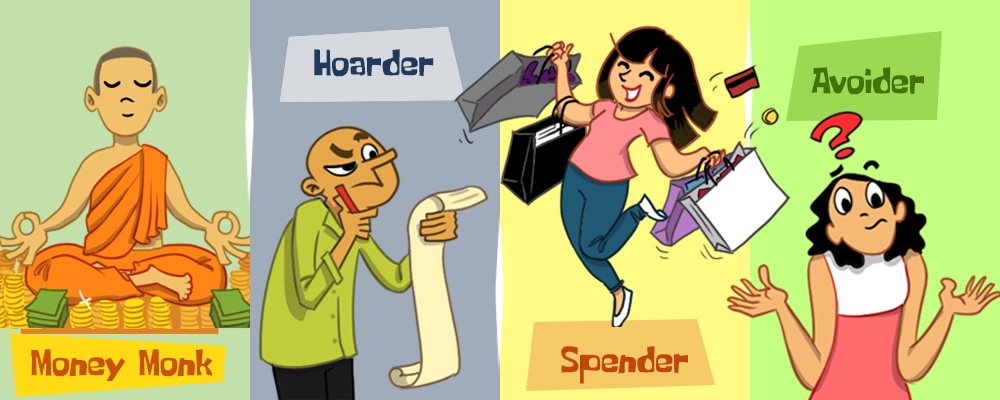
There are also some “hybrid” personalities.’
Money Status. A person who is both a money worshipper and money spender tend to focus on accumulating outward-facing symbols of wealth. They may prioritize buying an expensive car rather than investing their money. They may work very diligently to accumulate wealth. However, they may take on too much risk and may make dangerous social comparisons.
Money Vigilant. A person who is both a money avoider and money saver may be money vigilant. Someone who is money vigilant can be anxious or guarded around topics of personal finance. Benefits include a willingness to save and budget, not overspending on luxury items, and overall prudence. Pitfalls can be becoming a miser or over-stressing about finances.
Money Monk. A person who is both a money avoider and money spender may be a money monk. Someone who is a money monk can feel guilty when they have money. They do not like talking about money, but they are willing to work for it. They tend to spend much of their money on others. Benefits can include less stress in personal relationships and having a charitable spirit. Pitfalls include overspending and being unwilling to save for the future.
Money Hoarder. A person who is both a money worshipper and money saver may be a money hoarder. A money hoarder appreciates wealth and equates it to status. However, they do not outwardly display wealth to others. The benefits of being a money hoarder is a willingness to budget and save for the future. Pitfalls can include refusing to spend on things important for their health and having trouble navigating relationships.
As an example, here are my results: (1,F); (2,A); (3,B); (4,E); (5,E); (6,B); (7,B); (8,E); (9,E); (10,B); (11,B); (12,F); (13,F); (14,D); (15,A); (16,B); (17, B); (18, F); (19, E); (20,E).
So, my point allocation would be: Money Worshipper - 1 point. Money Avoider - 7 points. Money Saver - 7 Points. Money Spender - 5 Points. Money Indifferent - 2 Points.
My dominant personality types seem to be a Money Avoider and a Money Saver. I could then label myself as being “money vigilant.”
Subsection 1.2.5 Debrief
What should you take away from this activity? As you explore personal finance and start planning for your present and future, you need to work with yourself. Working against yourself will make financial planning difficult and stressful. For example, if you are a money spender and do not accept that part of your personality, saving and budgeting will be much harder for you. You may find yourself asking, “why can’t I stop buying X?”. If you can identify your relationship to money, it will help you assess what you already do well and what you need to work on.
You cannot change the entire world’s connection to money. You cannot change someone else’s relationship to money. You can only work on yourself. By understanding how you think about and use money, you can become more mindful of all the emotions that money can bring and be more prepared for them. You want to make sound, prudent decisions about money that will work toward your personal financial goals. You need to truly know yourself to make these decisions.

