Section 11.1 Common Scams
Scams and fraudulent behavior are everywhere. It is important to develop a nose for sniffing out this things. Falling for a scam or fraud could end up costing you thousands.
Subsection 11.1.1 Online Dating Scams
In the online dating scene, men are the primary targets. In this scenario, the scammer will create a fake dating profile and initiate conversation with you. What the scammer is after will affect the course of the conversation.
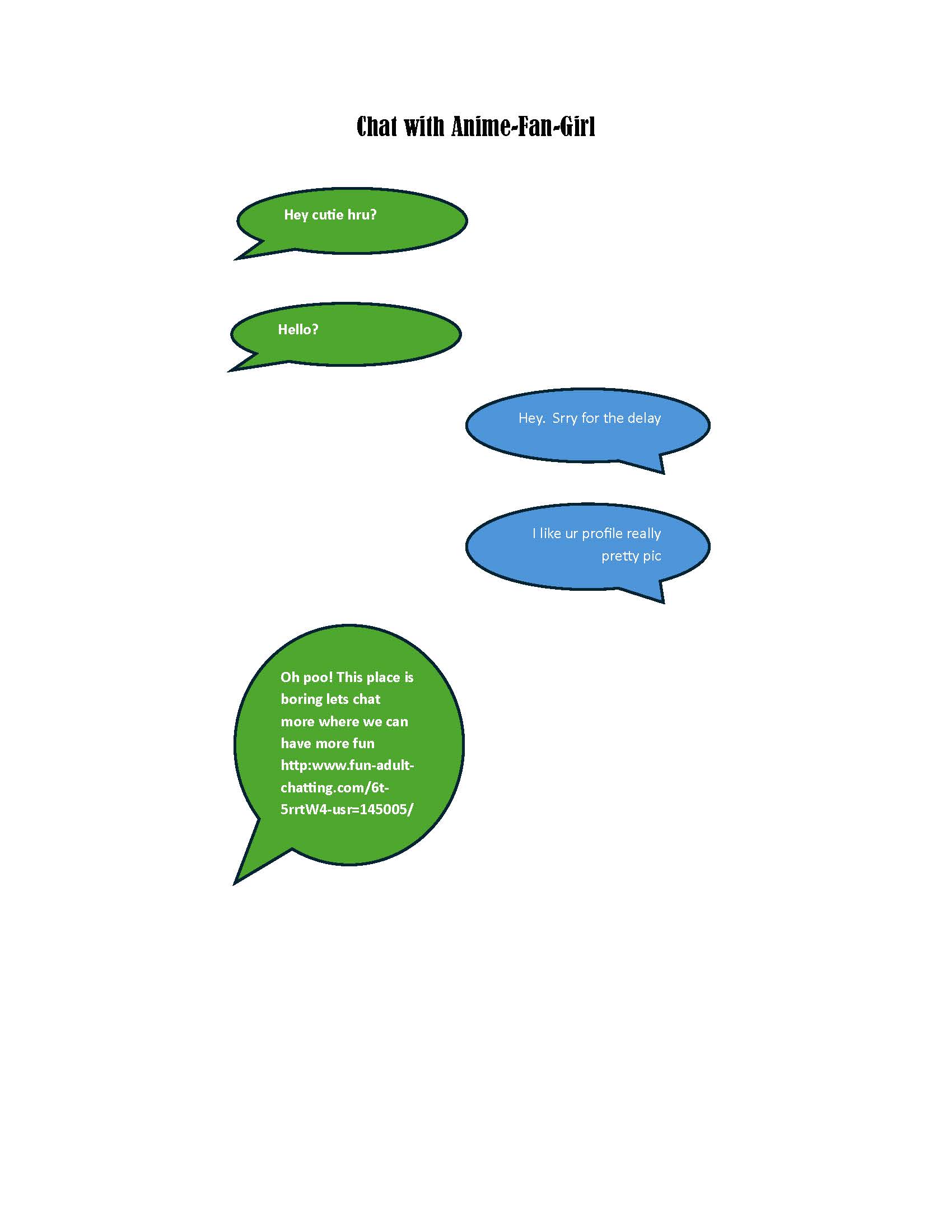
One common scam is to attempt to get you to move a conversation off the dating app. Generally, this is an attempt to get access to your personal information. Sometimes, the external site will ask for financial information like credit card and bank account numbers.
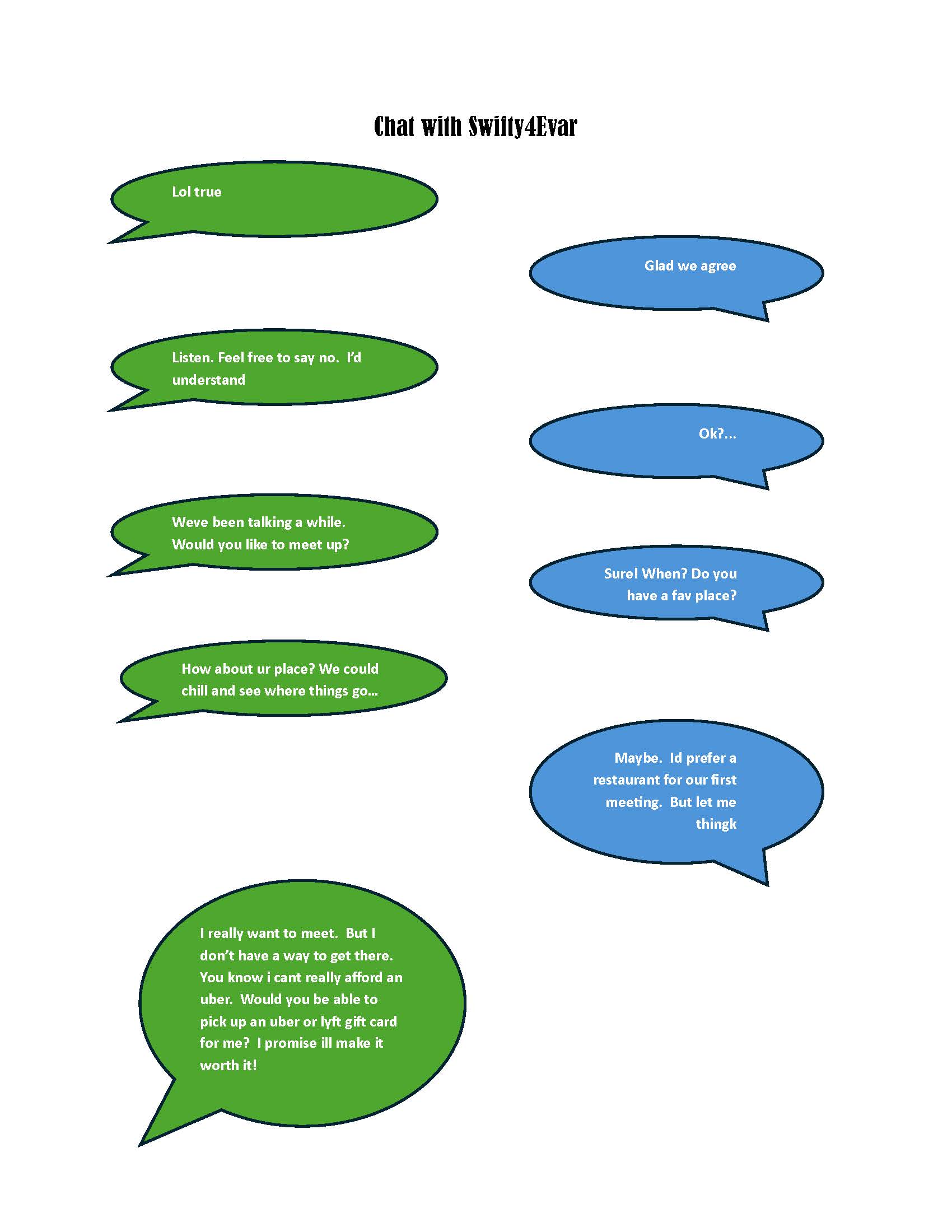
Sometimes, over a matter of hours, days, or weeks, you build a relationship with this fake person. The scammer will eventually ask for money or gift card information. The usual claim is that it is for travel to you or some kind of emergency. After sending photos of the gift card information, they will drain the funds.
Another common scam is simple blackmailing. Scammers may ask for revealing photos of you or inquire into very personal sexual interests. Some target people looking for a same-gender relationship but have no yet come out. Ultimately, once they the scammer knows your identity and has your photos or personal interests, they will demand money in exchange for their silence.
Cryptocurrency scams are also common. At some point in the conversation, the scammer will give you a “hot tip” about some kind of cryptocurrency and recommend you buy some. This is simply a mechanism to get your financial information.
Here are some tips for recognizing an online dating scam.
- Is the profile too good to be true? Do they have a single picture of a person meeting every standard of western Hollywood beauty? Scammer will try to target your primal desires.
- Is the personal being aggressive in starting a conversation and talking about feelings or sex? If a person very quickly develops eyes only for you, it is likely a scammer.
- Is the personal a US citizen but for some reason out of the country for a little bit? This is a common ploy, often centered around needing money for supples or travel back to the US.
- Does the person want to take the conversation off the dating app? In general, try to have a date in person before moving a conversation elsewhere. There’s no reason to use What’s App over the dating app conversation module.
- Does the person want revealing photos of you? Yes, many legitimate people will also ask you for revealing photos. Don’t send them to anyone. Don’t demean yourself. You can find someone you is interested in all of you.
- Does the person never seem to have the time or ability to meet? Do they cancel plans to meet? A scammer will almost never meet you in person.
- Are there any conflicts in what they say? Scammers try to tailor conversation around manipulating you. They often forget something they made up earlier.
- Does the person type using text that doesn’t feel natural? Scammers from other countries may make a number of poor word choices. Chat bots often use speech that is too formal.
- Do they ask for money in any way? That’s not how dating works. A relationship should never be started with providing financial support. If you’re asked for money, run away.
- Does the person want to know your social media information? This is often the start of someone looking to blackmail you.
Here are some tips to avoid online dating scams.
- Be wary of profiles with a single photo. Scammers will either grab a photo of someone online or create one with AI. It is difficult to have multiple fake pictures of a single person.
- Ask for a selfie. Good dating profiles show clear faces. It shouldn’t be a big deal to share other face pictures with each other. (Emphasis on “face.”)
- Ask to meet. Scammers very rarely will meet.
- Never send information or photos you would not send to a complete stranger. Until you’ve met the person in person a few times, always assume the person you’re chatting with is a complete stranger.
- Don’t take conversations off the dating app until you’ve met the person.
- Pay attention to what is said. Scammers may use chatbots what sound unnatural or too formal. They may also make numerous grammatical errors. They may also self-contradiction themselves.
- Never click on any links that are sent. There may be promises of photos, more information, more erotic conversation, money, etc. Just don’t click on them.
- Understand that healthy relationships take time to develop. If a person you’re chatting with quickly expresses strong emotional feelings, be wary. Relationships should never have a feeling of urgency.
Subsection 11.1.2 Job Scams
A lot of people want a high-paying job that allows them to work from home. Be wary of any posted job that pays well and allows for a great deal of freedom. Ultimately, these scammers are after money from you or your financial information. They will usually have a weird way of paying you, such as money transfers or Paypal. They may ask you for money from you to set you up in their system as a new employee.
You should never have to pay someone to work for them. You may need to pay for uniform or other things with a legitimate employer, but those are deducted from paychecks. Never pay someone money to work for them.
Be wary of sending any personal information. A legitimate employer will need your personal information for tax and labor-laws purposes. However, you need to be sure the employer you’re speaking with is legitimate before sending anything.
Here are some tips to recognize a job scam:
- Is the job too good to be true? Is it high-paying with very flexible hours with no experience needed? It is likely a scam.
- Are they asking for any money up front? You should never have to pay money up front to work.
- Do they want photos of you? Some scammers are after you face/eyes as more financial accounts can be locked with biometric data.
- Does the employer want to interview you via text? If you engage with this “interview,” you’ll be asked to click on links or provide personal information.
- Did they contact you, saying they saw your profile and really think you’ll be a great fit for them?
- Is there a sense of urgency? Are you being pressured to make a decision now? A good employer would never do that.
- Will they hire you without an interview? Competitive jobs will always require an interview.
- Are they using unprofessional tones? A reputable company with have a culture of professionalism. Typos, grammatical errors, and colloquial speech are red flags.
Here are some tips to avoid job scams.
- Understand the concept of “too good to be true.” There are millions of people who want a high-paying, flexible job that can be done from home. These jobs will never just fall into your lap.
- Research the employer. Is it a legitimate company? What are people saying on forums about it? Keep in mind that some scammers will create fake threads saying how great a company is. If other people are wary, you should be too.
- Never send money.
- Look for the job posting on the company’s website and not a job-posting site.
- Pay attention to the speech used in messaging. It should be professional and grammatically correct.
- Never click on links that start with http. You want https.
Job scams can be tough. There are a number of legitimate start-up virtual companies, particularly in the tech industry. Legitimate employers do need some personal information. You have to be very diligent. Never send personal information via a text, app chatting module, etc. Generally, it is safer to avoid virtual employers.
Subsection 11.1.3 Phishing
“Phishing” refers to the idea of using texts, emails, etc. to begin a conversation with you with the intent of getting money or personal information from you.
Younger generations are a bit more cognizant of phishing because they’ve grown up with the concepts. Older generations have a harder time detecting phishing scams. Nevertheless, phishing evolves everyday and can become harder and harder to detect.
There are a vast number of ways phishing attempts occur. Most are through emails and text. However, they can come through the mail or the phone and various apps. Here some tips for recognizing phishing scams:
- Is anything too good to be true? You didn’t win anything. You are not the long-lost heir to a fortune. No one needs a random US citizen to hide their fortunes.
- Are they using a generic greeting? Apart from spear phishing, most phishing scammers won’t know who you are. So, they’ll begin messages without using your name. Watch out for things like “Hello Dear” or “Dear Customer.
- Is something wrong with your account? Are you being asked to click on a link to fix your account? These scammers try to scare you into thinking something is wrong, hoping you’ll click on the link. The link will either cause malware to be downloaded to your device, or the link will take you to a page where you’ll be asked for financial information. (Maybe both.)
- Are you being asked to verify personal information? Businesses should ask you to confirm information.
- Are you being notified that there is suspicious activity on your account? Never click on link based on “suspicious activities.”
- Are you being offered money in any way? No one will every randomly contact you to give you money.
- Are you being told you owe money that must be paid now? Scammers try to use a sense of urgency to get your money or personal information.
- Are the email addresses involved from outside the supposed business? Is the business’ email address contain an error, like “amozon.com”?
Here are some tips to avoid falling for phishing attempts:
- Understand that things that are too good to be true are, in fact, too good to be true.
- Carefully look at the sender’s email address. Is it a generic domain like gmail? Is the company name misspelled?
- Verify what is being communicated outside of the conversation. If your aunt texts you and needs gift cards, call your aunt. A scammer may be impersonating her number. If you boss needs your personal information, write a separate email to them, using the known address, asking if the message was legitimate.
- Never click on links to verify information or fix a problem. Instead, log into your accounts as you normally would to see about any actual errors.
- Never provide personal information or information about your employer.
- Set your devices and accounts to update automatically. This way, nothing should every be in need of updating.
- Nothing is that urgent. Your account won’t be permanently deleted. The police are not on their way. Your family member doesn’t need gift cards to not starve.
Subsection 11.1.4 Service Scams
Some scammers will contact you, offering some kind of service for a low price. Most often, this is for home renovation or repair. They will ask for a large payment up front. They then either disappear with your money or do a terrible job.
Service scams can be tricky because of how payments work with legitimate contractors. Contractors do need money upfront to purchase materials and pay for workers. So, asking for money up front isn’t necessarily a red flag.
Here are some tips to recognize a service scam:
- Is the price too good to be true? A good contractor will charge a large, but fair price.
- Did they contact you out of the blue, offering a service? You should be the one contacting people to do work you need.
- Are they offering a regular service, like lawn mowing, but they want you to pay a large amount up front? Services like these can be paid after the work is done on a regular basis.
- Do other people know him? Ask for references.
- Is there a contract with blanks in it? Some scammers try to get you to sign a contract with terms to be filled in later. You may find yourself trapped in a legal contract that is very unfavorable to you.
- Is there a sense of urgency? Is the offer “now or never?”
Here are some tips to avoid service scams:
- Recognize what is too good to be true. Research market costs for home services. Offers way below market costs are likely scams.
- Ask to go with the contractor to purchase materials. Instead of giving money to them to get materials, you can can go with and pay for materials yourself.
- Never sign a contract with missing information or terms you don’t understand.
- Research the person. Ask for the names, numbers, and addresses of references.
- You should be the one looking for a contractor. Contractors should not be contacting you out of the blue.
- Get bids from other people. If it seems like most contracts charge more, the person who contacted you is likely a scammer.
- Verify any claims made. Some people may offer to install energy-efficient devices that will save you money. Research those claims.
- Be wary of financing offers. It is probably best to get a home equity loan from your bank instead of taking out a loan with the contractor.
Subsection 11.1.5 Investment Scams
Investment scams have been around for as long as there have been financial markets. With an investment scam, someone will contact you, offering access to a very profitable investment opportunity or training to develop an unbeatable investment strategy. These scammers are usually after a large sum of money or your personal information.
Here are some tips to recognize an investment scam:
- Is the offer too good to be true? Do they guarantee a very large return? Do they claim they have somehow come up with a proven strategy to beat the market? Remember, if there were a quick and easy way to make money in investing, we’d all do it.
- Are they contacting you? Legitimate financial companies may advertise their business, but they generally don’t contact you individually.
- Is anything “proven”? Financial markets have randomness to them. No one has a sure-fire way to get money quickly.
- Is the investment strategy based on cryptocurrency? Run from these.
- Is the investment strategy based on real estate? Run from these. If you want to invest in real estate, buy a property and rent it out. Don’t give people money to develop “world-class” property.
- Is the investment strategy based on metals, like gold? Run from these. If you want to invest in metals, do it yourself.
Here are some tips for avoiding investment strategies:
- Remember, things that are too good to be true are too good to be true.
- Watch out for promises of quick and easy money. If such a thing existed, you’d be learning it in this class.
- Watch out for investments in real estate, money, or cryptocurrency. You don’t need someone to invest in these. You can do it yourself.
- Reputable financial experts don’t need to contact you with opportunities. If you’re looking for financial investment advice, research people and find one yourself.
Subsection 11.1.6 Other Scams
Below are some other common scams to be aware of.
- Charity Scams: Some people set up organizations posing as a legitimate charity. Some become wildly successful, like the Wounded Warrior Project. Before giving to a charity, research them online. Get opinions from people on Reddit. Research them on Guidestar.
- Political Scams: Some people try to collect money to support a candidate or cause but run off with your money, If there is something in the political sphere you’d like to support, find that entity’s webpage and donate through there.
- Online Shopping Scams: Many marketplaces are unregulated, such as Facebook marketplace or craigslist. It is best to steer clear of transactions through these marketplaces unless you can see the product in person before purchasing. Often, you will not receive the item you ordered, or it is of significantly-less quality than the ad suggested. Stick to market places that guarantee your satisfaction.
Subsection 11.1.7 Activity: Spot the Scammers (emails)
Below are some emails people are likely to receive. For each, determine if the email is likely from a scammer or not. Explain your answers for each:
-
From: sjackson@wsumedical.org To: You Subject: I Need Your Report NowHi Ron,We’re going to need that XYZ report you’ve been working on by the end of today. The client is getting a bit impatient.When you get this, please call me at (413) 572-5711.Regards,Sue
-
From: manager-westfield@gmail.com To: You Subject: Are you busy?Hi,Sorry to bother you. Are you busy? I need help with something.
-
From: tech-wsumedical@yahoo.com To: You Subject: You need to update credentialsHey from ITWe getting a DNS error on our end when ever you log into the company system. For security purpose, you need to verify your login credentials. Because of the urgency, we will need to restrict you access to all accounts, including paycheck access.The process should only take a minute. You can verify your credentials HERE.Thanks for help.Sincerely,IT Team
-
From: bdruer@wsumedical.org To: You Subject: CALL ME NOW!Sarah, the client for the XYZ project is freaking out. We need this fixed ASAP. Call me now!
-
From: hr-wsumedical.org To: You Subject: Update your tax information (mandatory)Hi everybody,Because of the change with standard deductions for federal income taxes, everyone needs to ensure all their personal information is up to date. In particular, you want to review the number of exemptions that you claim.To access your tax information, log into the portal. Under “Employee Information,” there will be an option to edit/review your W-4 information.If you have any questions about the process or what anything means, don’t hesitate to reach out.Yours,HR Staff
Subsection 11.1.8 Activity: Spot the Fake Dating Profiles
Below are two dating profiles. Determine which is/are fake. Thoroughly explain all the red flags in the fake profile(s).
-
User: Amy_N_Westfield_Town
 Newly-single and looking for whateverName: AmyAge: 24Locations: Westfield, MABio: I tried the bar scene, but that didn’t work for me. So, now I’m trying the Bumpkin app.Me: I work as a data scientist for research firm. It’s not very exciting, but the job lets me enjoy a nice house and plenty of free time for fun. Speaking of fun, I love traveling - European cities or white-sand beaches are my favourite. Would love a travel partner. When at home, I really love all things gaming. RPG’s are my first choice, but I can hold my own with FPS’s. I think my personality is hard to peg down. I can be anywhere from “mild” to “wild,” depending on scene. I don’t really have any plans for this app and who to meet up with. Right now, I’m cool with something casual. But who knows?...You: I don’t really have strong preferences in terms of looks. You should be up for a good time, gaming, a lot of laughing. No self-identified “alpha-males.” Just be real.Alright, guys! It’s your turn. Come at me with your best pick-up line. The cornier, the better!
 -
(Yes, the photos are of me. Do not read anything into this. I just needed photos that I owned and didn’t need permission to use. This is for instructional purposes only.)User: LogicAndFinance247


 Name: JesseAge: 38Location: Westfield, MABio: Relatively new to the Bumpkin app. Took some time to myself after my last LTR, but I’m ready to see who’s out there now.I’ll give you the highlights, but I’d prefer to get to know each other over dinner.I’m a math teacher by the day. Despite my profession, I’m really am a nice guy. By night, when I’m not grading, I spend my time trying out new hobbies. (Just got into soap making.) You can tell by my size that I’m a fan of food. I love to eat it, but I love to make it even more. (Lasagna and tiramisu are my specialties.) In my younger, richer days, I traveled as much as I could. Work doesn’t really allow me financially or time-wise to travel, but I’d love to find a travel partner.In terms of dating, I try to have an open mind. Maybe someone around my age. An appreciation (or at least a tolerance) for immature humor is a must. I’m pretty quiet at first. So, you’ll need to be comfortable with a slow start. Relative financial stability on your end would also be a plus. Other than that, let’s not have any expectations.I’m not really into “photo swapping.” So, please don’t ask.If you want to check out my profiles on the socials, look for the same username.Chat with you soon.